Showing posts with label Case Studies. Show all posts

Monday, 22 February 2016

Documentary

A documentary film is a nonfictional motion picture intended to document some aspect of reality, primarily for the purposes of instruction or maintaining a historical record. It consists of or is based off official documents/information.

Documentary began when the first films were invented by the Lumiere Brothers in 1895. The Lumieres created a camera that could only hold 50 feet of stock film and their films were short unedited clips capturing the life around them. These were called actualities. The first official documentary or non-fiction narrative film was Robert Flaherty's Nanook of the North (1922), an ethnographic look at the harsh life of Canadian Inuit Eskimos living in the Arctic, although some of the film's scenes of obsolete customs were staged. The word Documentary was invented by John Grierson to describe this film. Grierson also described it as ‘the creative interpretation of reality’.

“Q: What is documentary for?
A: To record actuality.
Q: Why would one want to do that?
A: To inform people about it.
Q: Inform to what ends?
A: Either to affect our understanding--to change, increase, reinforce it--what may (but is not necessarily designed to) lead to action, may make better persons of us, and which may in turn make the world a better place to live in (Flaherty) or to make better citizens of us and to move us to collective action in order make a better society (Grierson).”

Undefeated is an Ethnological documentary which is a type of documentary that looks in the lives and culture of a particular group in a scientific or in this case an analytical fashion. On the other hand, A Complete History Of My Sexual Failures is a Mockumentary which Is a fiction film that uses a documentary form to suggest it’s a documentary but is often comical. It is also perhaps a documentary reconstruction because it is based on true events but not all of it.

Other types of documentary include Investigative documentary which A Complete History Of My Sexual Failures also fits in to. Personal documentary and authorative documentaries are two other types that a complete history fits. These documentaries’ also fit a range of different modes such as observational mode and investigative mode. A Complete History uses interactive mode which enables the ‘star’ to interact and almost converse with its audience.

Undefeated however is not so scripted and therefore rules out using interactive mode, but some characters do interact with the camera person in an interview style. As they do it A Complete History. Instead they use observational mode where they simply record things happening in front of the camera in long takes until they have what they need.

A Documentary filmmaker sets forth “not simply to register events and circumstances, but to find the most moving examples of them” (Bluem, 1972:10)

Thursday, 1 October 2015

La Haine and City Of God comparison


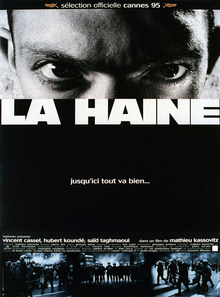
In this piece I will be comparing La Haine a 1995 film directed and co-edited by Mathieu Kassovitz and City of god a 2002 film directed by Fernando Meirelles and Katia Lund. I will be discussing themes and the similarities and differences between how they are portrayed.

One main theme discussed in both films is police brutality. Both of these films show how different races are treated by the police by they are shown in very different ways. In La Haine the police are shown to be against different races as it is set in Paris, France which is predominantly a white area. With the three protagonists in La Haine being of different ethnicity’s; Jewish, Arab and Black it is shown how they struggle to live with their lives whilst constantly having the police on their backs watching what they do. The theme of police brutality vs race is more evident in other films like La Haine such as Spike Lee’s 1989 Do The Right Thing.


This theme is also shown within City Of God however because it’s set in Rio, Brazil the police brutality doesn’t surround race but it more so surrounds class. The film is set in the poorer areas of Brazil where the easiest way to make money is through crime, the protagonist in this is poor and lives his life surrounded by others thieving and selling drugs in order to make a living. This is shown when Li’l Ze is walking with his gang and has a shootout with the police. The police constantly keep watch on the town because of this but don’t take much time to find out who has really done right or wrong. I think the police brutality is La Haine follows a more serious issue because of the discrimination of race that still links to the murders that are happening in the world today. Class is still shown in La Haine however on particular scene this is evident is when the three protagonists Vinz, Hubert and Said are sitting in a children’s playground are a news reporter and her cameraman come to talk to the boys about the riots that previously happened. Rather than joining them in the playground they simply look over the railings in the “pit” the park sits in showing the power and dominance the reporter has over the boys, it’s almost as if she’s looking in to an animal pen at a zoo.

Another theme that occurs in both films that links to police brutality is pride. In both films the characters they follow do not want to lose their pride and give in to the police.  In La Haine Vinz is the character who portrays pride, his pride is firstly described by a metaphor when and old man tells them a story in the toilets. The man goes on to tell a story about one of his friends Grunwalski. The Grunwalski story mimics our characters. In their situation they "miss the train" when (SPOILER) - Vinz gets shot, Grunwalski continuously reaches for the train but cannot reach because he tries to maintain his pride and keep his trousers up. The hand represents Vinz's quest for racial equality and an end to police brutality but he cannot reach them because he won't let go of his pride and co-operate with the police. In City Of God however Li’l Ze is trying to keep his pride by staying the “top dog” in the drug business by destroying all his competitors and still escaping from the police. He tries to keep his pride and reputation by not letting his competitors get away.


 The theme of masculinity also falls into this struggle for pride and reputation. This theme is mostly recognisable in City Of God because all the men in the drug business want to be the best and climb their way to the top defeating all competitors. Masculinity is incredibly evident when a young boy goes for help hoping he can help him get revenge for his father as he says “Kid? I smoke, I snort. I’ve killed and robbed. I’m a man” this conveys how committing crimes is all the young children see and think it’s the right thing to do if you want to grow up and become something better; a man. Rocket the centre protagonist also wants to show his masculinity through losing his virginity as if you become a man after having sexual relations. Masculinity is also a theme in La Haine but is not so frequent the main person who wants to be seen as masculine is Vinz who thinks he’s tough and brave after getting a gun, two both very stereotypical traits of becoming a man. 


Monday, 14 September 2015

La Haine


La Haine is a 1995 French black and white film written, directed and co-edited by Mathieu kassovitz. La Haine comes under the genres of Crime Drama and social realism but defiantly features many conventions of a thriller. The film has many different themes poverty which is shown throughout in the setting, racism and crime which again is shown throughout the film from start to finish, pride which is mainly featured within the character Vinz and revenge. Its French title is La Haine but when translated in to English it means hatred. The film follows three young men Vinz (Vincent Cassel), Said (Said Taghmaoui) and Hubert (Hubert Koundé) and their struggle to live in the banlieues (suburbs) of Paris, France faced with social turmoil and soon end up with a confrontation with the police.

The film shows the problems with racism with all three boys being from different races; an Arab, an African and a Jew, they have been singled out based on age, ethnicity and appearances. They have several run-ins with the cops during the course of less than 24 hours, and it seems that are being deliberately picked on due to race. They aren’t particularly bad teenagers and certainly not criminals. This film represents race and age in the same way. It shows that people can be treated differently based on race, if they don’t look like everyone else they are automatically presumed to be threatening and un worthy. Also they are young and again are picked on by the police this also suggests that young people/ teenagers are nuisances and get in the way of the law. Like Spike Lee’s Do The Right Thing, there is a sense throughout that all the hostility that has been building up with boil over and come to its climax at any point.


Kassovitz sets the full film in black and white which create more meanings and messages than he is trying to create an archaic sense. Instead by having it in black and white Kassovitz has been able to help the viewer imagine that perhaps their life isn’t as good as it’s usually made out to be. If the film was in colour he could show the picturesque scene of Paris and how beautiful and bright it looks but he wasn’t looking to show that he was looking to show the dullness and harshness of reality especially since it’s set in the suburbs.  Black and white are contrasting colours so he was able to show the contrast between imagination and reality with these two colours; not everything is what it seems.  This helped Kassovitz build on the narrative and get across some important themes.

There are many scenes within the film that convey different messages, one scene features a TV crew attempting to interview the three boys however they are looking down on the boys whilst they are sitting in a playground which connotes the boys are animals sitting in an animal enclosure. Also because they are sitting in a children's playground it has created a sense of boredom. Escape is shown as a theme when the DJ shown in a flat is blaring music out of the window. It plays an anti-police message to convey and experience of freedom for everyone in the community. 

One scene which could be considered quite an important scene is when Vinz, Hubert and Said are all standing around in the bathroom talking when an old man exits the cubicle. The man goes on to tell a story about one of his friends Grunwalski. The Grunwalski story mimics our characters. In their situation they "miss the train" when (SPOILER) - Vinz gets shot, Grunwalski continuously reaches for the train but cannot reach because he tries to maintain his pride and keep his trousers up. The hand represents Vinz's quest for racial equality and an end to police brutality but he cannot reach them because he won't let go of his pride and co-operate with the police.  

Overall I thought this film was good, it was very realistic because their lives weren't action packed with car chases etc. Instead it all came down to the troubled day-to-day lives of these boys. The performances are solid you could really understand their emotions. I really liked the idea of filming in black and white because it adds to the grimy street feel of the film.

Wednesday, 18 March 2015

Comparison between Inglorious Basterds and Miracle at St. anna

Throughout this piece I will be writing a comparison. Inglorious Basterds is the first film i will be comparing. It is a 2008 War film written and directed by Quentin Tarantino  starring Brad Pitt, Christoph Waltz, Melanie Laurent, Michael Fassbender, Eli Roth (Co-Director) and Diane Kruger. The film I will compare it too is Miracle at St. Anna which is a 2008 war film written and directed by Spike Lee, starring Derek Luke, Laz Alonso, Omar Benson Miller, Michael Ealy, Valentina cervi and Pierfrancesco Favino.


The first comparison is between the genres; both films are in the war genre and both are set following the events in WWII. However Inglorious Basterds is set in France during the war and follows a group of U.S Jewish Soldiers that plan to assassinate Nazi Leaders, it also follows a Jewish Cinema owner who had a past encounter with one of the leaders and plans to also assassinate the leaders. Where as Miracle at St. Anna is set primarily in Italy during the war and follows a group of four Buffalo Soldiers of the 92nd Infantry division who seek refuge in a town and bond with some of the town locals.


Both films are set around the same time yet get across different two very different points of view, the Jewish pov and the Black soldiers pov. The films are similar in that in both films the Nazi's are the obstacles that stop them from from reaching their goals and both films relate because they show the issues either religion or race had during the war. On the other hand Inglorious Basterds showed the issues between both religion and race because the lady who owned the cinema hired a black man and he was treated with no respect by any of the Nazi's. Miracle at St. Anna also produces war in a different sense. It shows the war between the Buffalo Soldiers and the American Army Generals.

Both films feature soldiers as their protagonists and they are all shown to be close, their relationships tend to seem more familial than friendly, like they have been together a long time and although they are at war and should be trying to protect one another in both films they seem more like they are protecting family. I think this familial relationship especially stands out in Miracle at St. Anna, and is portrayed even further when they find the young boy. In Miracle at St. Anna they all seem to work together and all have a say in what they will do where as in Inglorious Basterds Lt. Aldo Raine is the leader.


Inglorious Basterds predominantly follows a linear narrative, however their is a time skip from 1941 to 1944. Miracle at St. Anna on the other hand follows a non linear narrative because it is usually set during the war which in context of the film is the past and is shown in flashbacks. Miracle at St. Anna  could follow a circular narrative because Hector Negron who is introduced to us and questioned at the beginning is also the man that is shown at the end. A particular object that is found during the start of the film is also shown to us again at the end.

I feel that in both films the characters are developed however they are developed more in Inglorious Basterds, especially Shosanna who owns the cinema. I feel she was the most developed because we learnt about her back story which as the very first sequence of the film. However for me the characters in Miracle at St. Anna were easier to connect to because their plan was not to deliberately harm anyone but because of the situation they were in they had too. Sam Train was the easiest character to connect to because Lee made his character caring and at times relate able. Both directors produced the relationships between the characters really well.


In my opinion I preferred Inglorious Basterds because the narrative was easier to follow and the film was more exciting but  narrative in Miracle at St. Anna was stronger. However I think both films successfully showed the War genre in very different ways and were able to represent war in it's true self because neither tried to make it seem calmer or not as bad than it was.

Monday, 8 December 2014

The Selfish Giant Analysis


The Selfish Giant is a 2013 British drama written and directed by Clio Barnard. The film was inspired by Oscar Wilde’s children’s book ‘The selfish giant’. It is about two thirteen year old friends, Arbor (Conner Chapman) and Swifty (Shaun Thomas) who seek wealth from a local scrap dealer. It runs for 91 minutes and made £602,866 in the box office.

The film contained themes of friendship, crime, jealousy, family, and devastation. The very first scene showed the first feeling of friendship when Arbor is angry and is banging against his bed. Swifty tries to calm him down by holding his hand. The grip Swifty has on his hand looks quite tight and eventually Arbor does the same. This shows the strong bond between them because the hold is quite tight. When Arbor is under his bed shouting, it almost seems like he is trapped, he is banging on the bed in an attempt to escape. This links to fish tank with the theme of entrapment. This film also links to fish tank because at the beginning it shows an establishing shot of a field with horses and at the start of fish tank and establishing shot is shown of her town. Swifty also had an abusive father and in Fish Tank Mia had an abusive mother.


Crime is shown when Swifty and Arbor arrive at a train track on a horse and notice some men cutting some wire for scrap, but when the men hide from others that arrive at the scene Arbor takes his chance to steal the wire. When Arbor and Swifty arrive at a local scrap dealer we also find out that the boys stole the horse which belonged to the scrap dealer.

Jealousy comes in a little later in the film because Swifty starts to bond with the scrap dealer Kitten (Sean Gilder) about horse racing and slowly starts spending more time with Kitten leaving Arbor to feel unwanted and jealous.


Although family is a theme it is not shown in a good light because Arbor is constantly arguing with his brother. His brother Martin (Elliot Tittensor) appears to be addicted to drugs including taking his brothers ADHD tablets. The siblings don’t get on and this is made obvious by their language. They are constantly swearing at one another and Arbor’s brother even makes fun of Arbor for his ADHD by calling him a ‘spaz’. The family is troubled and don’t get along, they always seemed to be in an argument throughout the scene. However in one scene when his mum is crying Arbor comes over and hugs her. A close up of this hug is shown to show that there is love within the family.

Devastation is the last theme to be shown when Swifty passes away, Arbor devastation is made clear and the performances here are spectacular. This is a really sad scene because throughout the film they the performances audience to like and get to know the characters so when one dies many emotions are felt. Before Swifty dies a foul is shown, and this foul has died by electrocution which foreshadows Swifty’s death later in the film.


The cinematography was really effective especially when they used the shadows to represent the people. When Arbor is first underneath his bed he is shown as a shadow which perhaps shows his unhappiness and that his life is dark. When both Arbor and Swifty where going out during the night, you saw them run across a field (with Swifty on a horse) and they were shadows. But they were soon lit up more because they are together so shows how calm Arbor is when he is with Swifty and how much more relaxed he feels with him rather than his family. The lighting was dark throughout; even during the day the sky was filled with grey clouds this shows that they will never have a bright day.

I enjoyed the scene after Swifty had died and Arbor was under the bed again because he was so upset and didn’t want to talk to anyone. During this scene a hand is shown grabbing Arbor’s and the hand is then shown to belong to Swifty. This was a powerful scene because although we know that Swifty is dead it makes us want to believe he is back. Swifty holding Arbor’s hand and he lay under the bed was also the first scene to be shown of the film. This makes us question whether it’s a new scene or a speechless version of the first one. I think it would have been quite clever to have shown one of the last scenes at the beginning.

Monday, 24 November 2014

My Brother The Devil analysis


My brother the devil is a 2012 British film written and directed by Sally El Hosaini. It is set in Hackney, London and is a social realism urban story.  The film includes the themes of Anger, destruction and survival. Anger and destruction are portrayed throughout because the film features in two brothers and their gang and the rival gang. Survival is a key part in this film because the film is about two brothers growing up in gangland London.

Before the film starts we see a series of various photos of groups of teenagers in different locations. This is the starting point that gives us a general insight into the sort of setting that will be used and almost what some of the film will entail. In between these images it shows a boy who we later find out is called Rashid or Rash (James Floyd) boxing.  As the film progresses it may seem that he is boxing to defend himself against others in his neighbourhood. Another boy who appears younger; Mohammed or Mo (Fady Elsayed); is show leaving school as close ups of shirts being signed are shown. Both these small clips at the very beginning set the scene and characters. Although we are unsure who these people are we can presume they are going to be the protagonists. After this the images are shown again and one by is pictured with what look like drugs which give us an insight to what these boys lives may be like.

When Rashid boxing is shown again it is in slow motion which may be portraying his focus. Other slow motion shots are used throughout the film to maybe show the tension. The slow motion shots make me quite curious because you try and imagine what that person is thinking and how they are feeling.


The handheld camera is used to show their lifestyles and status in society. When Mo is terrorised by his brothers rival gang constant close ups are shown of the boys in the gang. As these close ups are shown the camera is moving around which puts the audience in Mo’s position as if we are being pushed around and that is the view we can see. Also as he runs from the gang to camera is following behind him still using handheld camera to emphasise his instability.

Both gangs meet up at some point in the movie. Demon the leader of the rival gang has a dog and constant close ups of the dog are shown to portray to danger of the situation. In this scene Demon lets his dog of his leash to attack someone. During this time a lot of noise it being made, shouting, cussing and sounds of the fight occurring. However the boy that the dog attacks stabs him which causes everything to become silent. This is effective because it shows the shock of everyone in the area. It is also continuously silent as Demon (Leemore Marrett Jr.) stabs Rash’s best friend and fellow gang member Izzi (Anthony Welsh). The silence when Izzi was killed was a surprise because I thought there would be more of a reaction from Rash’s gang. Instead both gang’s ran off which made it seem like although the gangs fight no killing it ever involved.

I liked the shots used when Rash was running away from the scene because included in this was the sound of his heavy breathing which portrayed his terror and the unpredictability of what just happened.  The sound of the police sirens where also in the background and when Rash was underneath a bridge you could hear the sound of a train going past above. The train got louder as it passed and then everything went silent which makes me think that Rash zoned out and wasn't really thinking of anything he was just stood there in a daze.


The only light in the house when Rash returned home was candle beside his mum as she slept and when he attempted to turn on the lights no lights turned on which emphasises there living situation and lifestyle because it shows they are poor as they can’t pay for the electricity.

The best shot for me throughout the movie is when Rash gets a gun and is standing in the bathroom loading it and practicing because he wants to take revenge. When he holds it up towards the mirror it is dark and he looks as if he is dressed if pyjamas but the camera suddenly switches round to the other side of the wall which is also Rash holding a gun up to the mirror but he is fully clothed and it is daylight. This is used to quickly switch between the time which it is set; the night before and the morning. His clothes are then the same when he arrives at the tattoo parlour which highlights what the mirror shot was about.


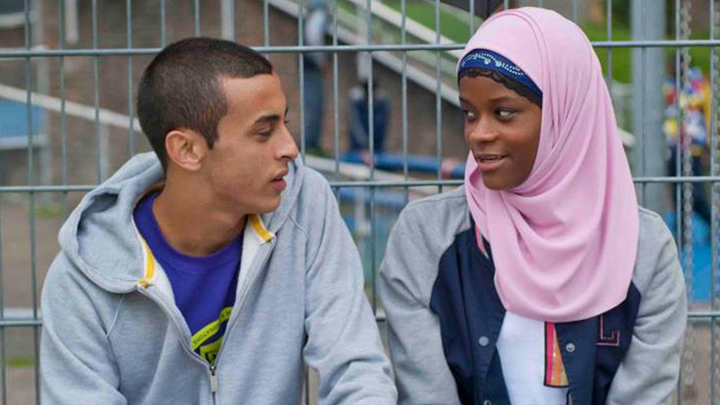
In one scene Mo is sitting with his two friends Aisha (Letitia Wright) and Jamie (Aaron Ishmael). Aisha is listening to music through her headphones but if is quiet and slightly muffled; they are letting us hear what Mo can hear in this scene. But when Mo puts o the headphones instead we can hear the song clearly and louder again giving us things from his perspective.  It seems like they what us to relate with Mo because we keep seeing things from his point of view. Aisha is holding a sparkler and different views of the sparkler are shown but when the sparkler goes out the music stops as well and everything is silent.

I enjoyed this film because I think this film showed all the different struggles that people go through, in this film it ranges from life in a gang to homophobia. It focused on the two brothers and what they did to find their true identities


Saturday, 1 November 2014

Dirty Pretty Things analysis

Dirty Pretty Things is a 2002 British thriller directed by Stephen Frears and written by Steven Knight.  It was produced by Robert Jones and Tracey Seaward.  The film had a budget of about £6.2million and runs for 97 minutes, the film made 8.7 million in the box office. This film shows the main themes of Love, Crime, determination, revenge and escape. The themes of determination and escape link quite well together in this because both protagonists are determined to leave the UK and carry on their lives elsewhere. The theme of crime is shown throughout the film and Love is only made obvious at the end of the film. Revenge however is shown plainly in one rather queasy scene nearer the end.

Dirty pretty things is set in London and focuses on two illegal immigrants Okwe a Nigerian doctor played by Chiwetel Ejifor and Senay a Turkish maid played by Audrey Tautou who work at the same West London hotel. Both have come here to improve their lives but find that the system makes it difficult for them to keep living in Britain. The protagonist Okwe was forced to leave Nigeria for reasons that are gradually explained throughout the course of the film. Now he works as a cab driver by day and a hotel desk clerk by night. The hotel is a place used for drug dealings and the surgical removal of organs from desperate immigrants in exchange for passports. These are all carried out by the hotel’s head receptionist Juan (Sergi Lopez) known as Sneaky.

The title "Dirty Pretty Things" may refer to hotel rooms and the guests who stay at this downtown London hotel. They come in and "dirty" up the rooms and it is up to the two protagonists of this movie and the other hotel employees to turn the rooms back into "pretty things" once again.

The performances were sympathetic and engaging, and both Ejifor and Tautou portrayed their fear in an incredibly realistic way. They both made me worried for them as they were on the run from the dangerous side of London. This film revels in the silent situations it creates and allows the viewer to be challenged along with the character. We grow attached to Okwe, but his background is still shrouded in mystery. Lopez managed to make the viewers feel uncomfortable due to his sly, unnerving behaviour yet, and I was left throughout the majority of the film wondering whether or not he was the good or bad guy until he showed what he was really up too then he certainly made me 
cringe.


When we are first introduced to Okwe, he appears to be wearing quite shabby clothes with dull colours. This highlights that Okwe is not very wealthy. During the very first scene slow piano music is playing, this helps to create drama and makes the audience feel sympathetic towards Okwe. When Okwe talks to two business men at the airport to offer them a lift, the frame is positioned so the two men are higher up then Okwe highlighting their dominance as he stands behind them. Also Okwe is not given eye contact in this scene when he communicates with them. This helps to show immigrants are not treated equally and with respect. Where Okwe drives too is shown and it appears to be very run down. The lighting in dark and gloomy which implies it may be quite a dangerous place. Okwe speaks to another man but this time there is no clear divide and they are faced towards each other which shows they have the same status in society.

There was one particular scene in the film which I enjoyed and they used a lot of components in this scene to make it feel tense. Okwe has been told by a prostitute, Juliet (Sophie Okendo) to go and check one of the rooms, when he first enters the room a high angle shot is used to show Okwe’s vulnerability and makes him appear harmless. He enters the bathroom when he hears running water to find an overflowing toilet. Just before he enters the room the lighting is very dark suggesting to the audience something bad is going to happen.  He then goes on to search for the object that is blocking the toilet. He tries to get the object out with a bent hanger and shows an annoyed expression. The water starts to turn red which as this point, this made me worry because I was unsure yet I really wanted to know what was down the toilet. The camera shows a shot looking up towards Okwe from the toilet and he shows a shocked expression but as he pulls out a heart rather tense music starts to play. The music also begins to get louder as he pulls the heart out which builds tension and to add drama to the scene making the audience feel anxious. The music stops when the door slams implying someone has entered or left the room.


The camera shows a long shot of the hotel where Okwe and many other immigrants’ work and from this shot we can tell that the hotel uniform is red and the sign is red. This is quite significant because the colour red connotes danger and inside the hotel a lot of illegal activity happens. For example prostitution and immigrants trading in their organs for passports.


Nearer the end of the film Okwe has made a deal with another man in the parking lot and the man asks “How come I’ve never seen you before” to which Okwe replies “because we are the people you don’t see” This reveals that throughout the film the producer may have been trying to show how different immigrants are to everyone else because they are always aiming to not be seen. At the start of the film the reveal of the unseen begins. Filmed in London it takes us to unfamiliar areas and denies us helpful establishing shots that orient us to the city we never see, for instance, Big Ben, Westminster Abby, or Piccadilly Circus. In doing so Dirty Pretty Things presents, a different London if it is even “London” at all. The film opens with Okwe soliciting fares for his cab however it’s not the iconic and “official” black cab of London but a simple passenger car at Stansted Airport. The kidney also resonates with the theme of invisibility in the film. Like the central characters of the film, the kidney, however vital; is an organ we do not see, at least not on the surface.

Other than the hotel nearly every location in the film must be entered through a maze of tunnels or back ways. Okwe accesses Senay’s apartment, for instance, by cutting through the back of a convenience store and going up a fire escape. His cab office, approached by driving through a series of tunnels, is tucked away under a bridge where trains endlessly roar past. Okwe’s friend Guo Yi (a Chinese immigrant) works in a dank morgue in the bowels of a hospital where he happily lets friends stay when they need a safe place. The fact that the morgue is connected to a hospital makes the pilferage of medicine rather easy and convenient which helps out Okwe with his money troubles and he works as a doctor on the side. Again all these separate escape routes show how the immigrants have desperation to stay hidden away from everyone else in the fear of being turned in to the immigration officers.


I enjoyed the film because I felt the performances were able to show a vast array of emotions and I could connect easily with the characters. Also it was good because this film isn’t just a mystery about downtrodden immigrants trying to survive. There are nice comic touches and a romantic side. 

Sunday, 19 October 2014

Fish Tank Analysis


Fish Tank is a 2009 British coming of age drama with the sub-genre of social realism and was written and directed by Andrea Arnold. It was produced by Nick laws and edited by Nicolas Chaudeurge. The film won the Jury Prize at the 2009 Cannes Film Festival; it also won the 2010 BAFTA for Best British Film. The film had a budget of £1.8million and runs for 123 minutes, they made £1,451,678 in the box office. Set on a council estate in Essex, Fish tank is focussed on the story of 15-year-old Mia played by Katie Jarvis. She’s just been thrown out of school, has fought with her friends, and is heading down a route of self-destruction. Her sister Tyler (Rebecca Griffiths) is too young to offer any real support, and her mum Joanna (Kierston Wareing) is more interested in partying than raising her children. But one day her mum brings home her new boyfriend Connor (Michel Fassbender) and it turns her life upside down. The main themes in Fish tank are jealousy, betrayal and lust. They are all shown throughout the majority of the film. When Mia wakes up one morning to see Connor in the kitchen, she is torn between anger and lust. Soon the relationship between Connor and Mia’s mother blooms, and he begins to bond with the whole family, but just as things seem to be going well the bond oversteps the line.


Mia shows a passion for dance and when she’s dancing she gives off a natural warmth and energy that seems muted by trauma and social isolation when she’s at home and out on the streets. Dance seems to be Mia’s way of showing her self- expression. This trauma is shown a lot when she’s around her mother Joanne, as she’s not given any loving attention instead she’s given an occasional threat or insult. Social isolation however is shown when she finds the neighbourhood girls in a parking lot and ends up in scuffle with one of the girls. After head butting one of the girls the police and social workers are called and Mia is told she is being sent to a school for the troubled youth. Mia fixates on freeing a frail horse that’s alone and chained up and decides she wants to set it free. The horse represents Mia in this situation because the horse in isolated and is trapped by the chains just as Mia is isolated socially and trapped with her cold mother who couldn’t care less what she got up too. At the end of the film a balloon is seen flying into the air which shows Mia’s freedom when she leaves with her new friend Billy. Mia is attracted to this alluring white horse just as she’s attracted to Joanne’s alluring new boyfriend Connor.

Connor is remarkably unnerving in the film; Fassbender exaggerated Connor’s kindness just enough to make the scene feel uneasy but not enough to make you think he was deliberately aiming to be something other than a father figure. Eventually Connor does go too far with Mia, and Fassbender gives us a mixture of lust and guilt. But Mia allowed him because she has desperation for love and care, the things she doesn’t usually receive at home.  An older man pursues a teen-age girl, but there’s a stronger candidate her own age for her affections: Billy (Harry Treadaway), a skinny boy hanging around the neighbourhood, who’s shy and inarticulate but mysteriously unafraid of quarrelling with Mia.
 I did notice in moments throughout the film that slow-motion was used especially when Mia and Connor were together. They seemed to be used to show the tranquil, relaxing atmosphere that was not around whenever Mia was near home. It perhaps showed the few moments that Mia enjoyed in her life, the moments where she just wanted to slow down time so it would last forever, the moments where she felt companionship. Also close-ups and mid shots were used a lot with Mia and Connor together to perhaps show how close they were. Mia’s mum is absent during a lot of the film and when she is in the scene it’s for short periods of time usually using a close up or mid shot. Both of these shots only show part of the person which matches her lack of presence in her daughter’s life. The same shots featuring Mia and two different people portray very different stories about her feelings which is very powerful. The use of the handheld camera is used for the vast majority of the film but is used less during the middle of the film. This may be because at the beginning and end Connor is not around so in Mia’s eyes their life is so much more unstable but when Connor is around their lifestyle seems to be so much better and they come across as a secure family. At some point when Mia is dancing the camera shows her from behind and her whole body looks like a shadow which tells me that dancing makes Mia feel like her true self the part of her nobody else see’s because shadows only show you and they are always there but they only come out during the night just like this side of Mia only comes out when she’s dancing.

The film does seem to show the stereotypes of council estates. Mia is running around in a full tracksuit where as the other girls are wearing skimpy clothes including her mother. Parties seem to be happening everyday with music blasting throughout the flat even during the day. All the buildings are in terrible conditions with abandoned flats inside like the one Mia uses to practice her dancing, and troubled children wandering around everywhere shouting inappropriate words at each other. Within these stereotypes however Mia is not as exaggerated and is seen as more of a victim in this ‘Broken Britain’. She only shouts and fights back when she recognises something as dangerous or trouble and is not deliberately starting fights for no apparent reason like the initial stereotype of council estate teenagers. All the teenage characters are working class but the main male character is middle class which may reflect the dominance middle class people have over the working class. In this case Connor had power over Mia.  

Throughout the film there is constant background noise. There is never a scene where it is completely silent. A lot of the time there is shouting in the background if nothing else which adds to the thought that Mia may have had quite a troubled up bringing living in a area like this. However these sounds are ignored by Mia which tells us she is used to them. The sky is usually bleak and dreary but it is still quite bright.

The film is remarkable for its depth. It’s not drilling in a message about the hopelessness of poverty, nor is it stylising the lifestyle of those living on council estates. Alcohol, drugs and smoking are neither demonised nor glorified. This web of problems and possibilities is interwoven to create a film that succeeds in harnessing all of the dramatic power available in its desolate setting without draining it of its realism.

In my opinion all of these elements make for gripping viewing. I found that the compelling characters and their movingly real stories really interested me. It’s a hard-hitting drama with bags of character, loads of issues and an amazing central performance.